


CROSSCARRIERS.COM
And he (Jesus) said to them all, If any man will come after me, let him deny himself, and take up his cross daily, and follow me. (Luke 9:23)

george@crosscarriers.com




Some comments that I found on current event…
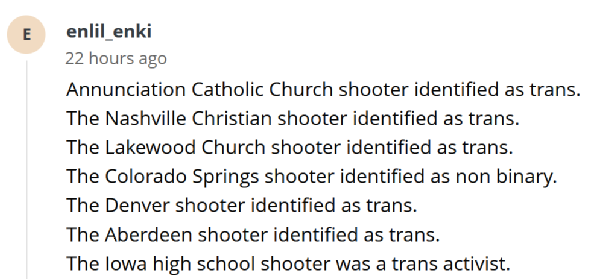

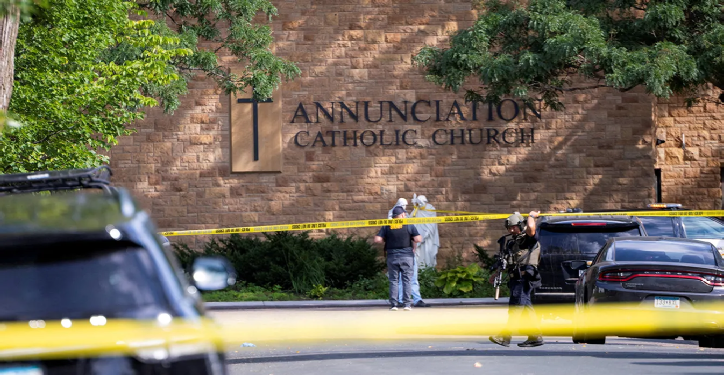

Minneapolis school shooter …, ???
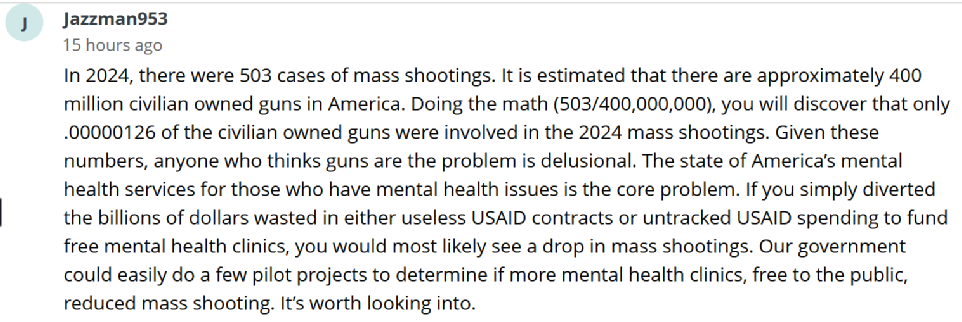
The Biblical Perspective on Self-Defense and Gun Rights:
An Exploration of Faith and the Second Amendment
Introduction
In contemporary America, the debate over gun rights and the Second Amendment is deeply intertwined with questions of biblical ethics, personal safety, and government authority. Many Christians turn to Scripture for guidance, seeking to understand whether self-defense and gun ownership align with biblical principles. This paper explores the biblical foundations for self-defense, the teachings of the New Testament, and how these inform a Christian perspective on the Second Amendment, emphasizing the importance of faith, responsibility, and peace.
Biblical Foundations of Self-Defense
The Bible acknowledges the right and duty to protect oneself and one's family. One of the clearest Old Testament verses supporting this is Exodus 22:2 (KJV):
"If a thief be found breaking in, and be smitten that he die, there shall no blood be shed for him."
This suggests that defending oneself against an immediate threat is not only permissible but morally justified. Throughout Scripture, figures like Abraham (Genesis 14:14) and David (1 Samuel 17) carried weapons and actively defended their people, exemplifying the biblical acceptance of armed protection. Nehemiah 4:17-18 illustrates the necessity of readiness, as the builders of Jerusalem’s walls carried weapons while working, symbolizing vigilance and self-defense in the face of opposition.
New Testament Perspectives and the Ethic of Love
While Jesus emphasized love, forgiveness, and turning the other cheek (Matthew 5:38-39), He did not explicitly prohibit self-defense. In Luke 22:36, Jesus instructs His disciples, "He that hath no sword, let him sell his garment, and buy one." This indicates an acknowledgment of the need for protection in a fallen world.
However, the New Testament also emphasizes love and peace, exemplified in Matthew 5:9, "Blessed are the peacemakers," and Romans 12:18, "If it be possible, as much as lieth in you, live peaceably with all men." The Apostle Paul’s writing in Romans 13 highlights that governing authorities are instituted by God to maintain order and justice (Romans 13:1-4). This delegated authority includes the right to punish wrongdoers and protect the innocent, supporting the biblical justification for a society that values law and order, including the right to bear arms for self-defense.
The Second Amendment and Biblical Principles
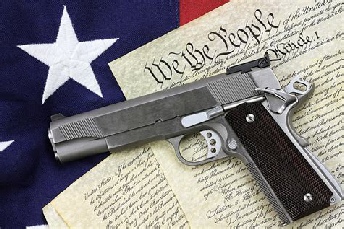
The Second Amendment states, "A well regulated Militia, being necessary to the security of a free State, the right of the people to keep and bear Arms, shall not be infringed." Many Christians see this as consistent with biblical teachings, viewing gun rights as a God-given liberty designed to prevent tyranny and safeguard families. As Psalm 127:4 (KJV) affirms, "As arrows are in the hand of a mighty man, so are children of the youth. Happy is the man that hath his quiver full of them." This verse underscores the importance of protection and provision for one’s family.
While Christ’s teachings emphasize love and peace, they do not negate the right to defend oneself. Instead, they call believers to balance their pursuit of peace with prudence and responsibility. The right to bear arms, therefore, can be seen as an extension of biblical principles of protection, stewardship, and liberty.
A Call for Responsible Protection and Faithful Citizenship
Christians are called to live peaceably and love their neighbors (Romans 13:10), yet also to be wise and prepared. The biblical view recognizes that sometimes protection involves readiness and the use of force when necessary, always tempered by love, justice, and discretion. This balance is vital in navigating modern debates on gun laws and rights.
Defense of Liberty and the Role of Government
The biblical perspective supports the notion that government authorities are established by God to uphold justice (Romans 13:1). When leaders attempt to infringe upon constitutional rights, such actions can be viewed as contrary to divine order and law. The Second Amendment is regarded by many believers as a divine safeguard against tyranny, echoing the historical context of the founding fathers who sought to prevent oppressive rule.
Conclusion
The biblical perspective on self-defense and gun rights affirms that protecting oneself and one’s family is consistent with Scripture. While Jesus teaches love and peace, He also recognizes the reality of a fallen world where self-protection is necessary. The Second Amendment aligns with biblical principles of liberty, responsibility, and justice. Christians are called to exercise their rights responsibly, balancing the command to love with the duty to defend. As believers seek to uphold these values, they must do so with faith, wisdom, and a commitment to peace, trusting in God's sovereignty while exercising stewardship over their safety and freedoms.
References:
Exodus 22:2 (KJV)
Genesis 14:14 (KJV)
1 Samuel 17 (KJV)
Nehemiah 4:17-18 (KJV)
Luke 22:36 (KJV)
Matthew 5:9; 38-39 (KJV)
Romans 12:18; 13:1-4 (KJV)
Psalm 127:4 (KJV)
Note: This paper reflects a biblical and faith-based interpretation of self-defense and gun rights, emphasizing responsible stewardship, love, and the protection of liberty as rooted in Scripture.
More on issue of governments that disarmed:
Throughout history, there are several examples where governments' efforts to disarm the populace have been associated with increased control and the emergence of authoritarian regimes. Some notable examples include:
Soviet Union (1920s–1930s): After the Bolsheviks seized power, the government implemented strict gun control measures, including disarmament campaigns, which facilitated the consolidation of power and suppression of dissent.
Weimar Republic (Germany, 1920s–1930s): While not a complete disarmament, restrictions on firearms were enacted, which some argue contributed to the political instability that allowed the Nazi Party to rise to power.
Cambodian Khmer Rouge (1975–1979): The regime severely restricted private weapons ownership, consolidating control over the population to enforce its brutal policies.
North Korea (post-1950s): The government maintains strict control over weapons, disarming the populace to prevent resistance and maintain authoritarian rule.
China (1949 onward): The Communist government, after coming to power, implemented extensive gun control measures, disarming citizens to suppress opposition and establish control.
In these cases, disarmament was often part of broader strategies to centralize authority, suppress opposition, and establish or maintain authoritarian regimes. It's important to analyze each context for specific factors involved, but generally, disarmament can reduce the ability of the populace to resist government overreach.
I used AI to produce paper/notes. George.